
Benzie County Scheduled vs Actual Release
A projected or scheduled date is a planning point. The actual release date records an event that occurred. For a Michigan state prisoner, OTIS uses the labels Earliest Release Date and Maximum Discharge Date. The earliest date marks when the minimum term has been served and the Michigan Parole Board gains jurisdiction in an eligible case. It does not direct prison staff to release the person that day. The maximum date marks the end of the maximum term if parole does not occur first.
A pretrial person at Benzie County Jail has no sentence-based release date to compute. Bond, recognizance, dismissal, a new order, another hold, or later sentencing may change custody. Even a bond order shows legal authorization, not the minute jail staff complete processing. For a person serving a county sentence, the judgment and the jail's credit calculation matter. Neither case belongs in OTIS unless MDOC jurisdiction exists.
The label is part of the evidence. Calling every OTIS date a projected release can turn a parole-eligibility point into a false promise. Calling a transfer from Benzie County Jail a community release creates a different error. Confirm both the date and the release disposition.
Find a Benzie County Release Date
Start with the agency that now holds the person. The Michigan OTIS offender search applies to state prisoners, parolees, and probationers under MDOC, plus discharged people still within the public display period. It does not contain people sentenced only to Benzie County Jail. A blank OTIS result is therefore normal for many local cases and cannot answer the county release question.
For Benzie County Jail, use the official Sheriff contact, inspect the correct court file, and request the release entry when written proof is needed. The 85th District Court covers misdemeanors, bond and arraignment activity, and preliminary felony stages. The 19th Circuit Court covers felony disposition and sentence. Court events explain legal authority, while the Sheriff record confirms physical exit or transfer.
- Determine whether the person is pretrial, serving a county sentence, committed to MDOC, or held for another agency.
- For MDOC, search by MDOC number when known, open the full OTIS profile, and compare the court and sentence data.
- Read Current Status, Earliest Release Date, Maximum Discharge Date, and Date Paroled only when those fields apply.
- For a county sentence, obtain the judgment and ask the jail for its current calculation rather than doing a web estimate.
- Check for amended orders, consecutive terms, prior custody credit, disciplinary changes, and outside holds.
- Confirm the completed event through Date Paroled, the Sheriff release form, or an agency discharge record.
A named-person release search that crosses Sheriff, court, and custody systems is covered in the Benzie County released-inmate search path.
Benzie County OTIS Release Fields
OTIS is useful only when the person entered MDOC jurisdiction. Search by MDOC number when possible because it is less ambiguous than a name. Otherwise compare identity, offense, sentencing court, sentence, and status. Open the profile rather than stopping at the results list. The current status should be read before any date because it distinguishes prison, parole, probation, discharge, and other MDOC states.
| OTIS field | What it means | What it does not prove |
|---|---|---|
| Current Status | The person's current MDOC classification | The exact Benzie jail exit time |
| Earliest Release Date | Minimum term served and Board jurisdiction in an eligible case | A guaranteed parole or release appointment |
| Maximum Discharge Date | End of the maximum term if parole does not occur first | That the person will remain in prison until that date |
| Date Paroled | Historical prison-to-parole transition when shown | The later end of parole supervision |
| Sentence and court data | The terms and originating case used to identify the record | That no amended judgment or credit issue exists |
The MDOC release-date definitions explain these labels and correction routes.
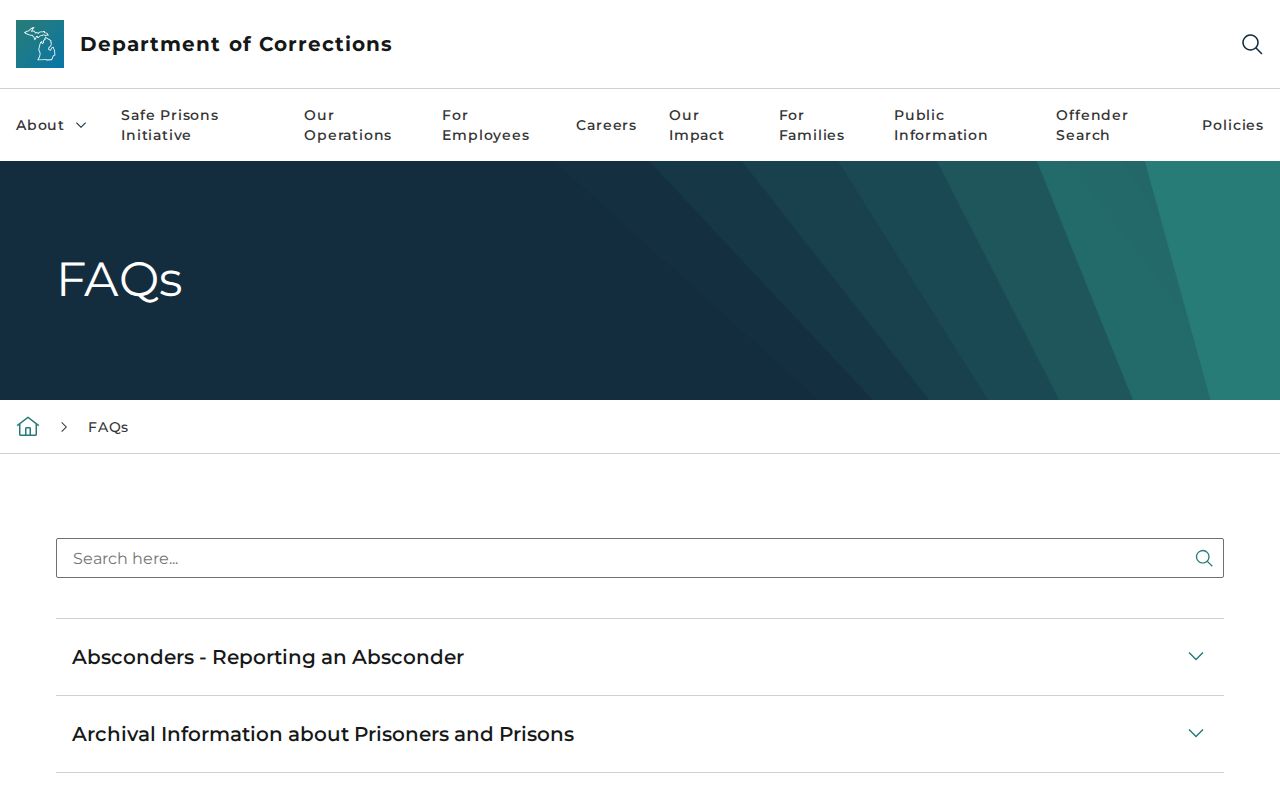
The official definitions keep an Earliest Release Date separate from Date Paroled and Maximum Discharge.
OTIS is a public snapshot, not a certified release certificate. MDOC disclaims warranties of complete and timely data. Court-derived errors belong with the sentencing court, while supervision issues go to the proper parole or probation office. For durable proof, request a disclosable discharge or parole record through MDOC FOIA.
Note: OTIS retains discharged people for three years after supervision discharge, not merely three years after prison release on parole.
Benzie County Truth in Sentencing
Michigan is not a universal 85-percent state. Modern truth in sentencing requires people in covered offense cohorts to serve the full judicial minimum before parole eligibility. The rule became fully effective in stages for specified assaultive crimes committed on or after December 15, 1998 and other covered crimes committed on or after December 15, 2000. Those cases do not reduce the minimum through good-time or disciplinary credits.
MCL 791.234 governs Parole Board jurisdiction, eligibility, excluded offenses, and life-sentence categories. Consecutive terms are added as the statute directs. Reaching the minimum permits consideration in an eligible case. It does not compel a grant. MCL 791.233 supplies the parole-release standard, including the required assurance about statutory risk.
A favorable Board action can still be suspended before release because of misconduct or new adverse information. A grant is thus weaker release evidence than current OTIS status and Date Paroled. Life without parole and offenses expressly denying parole do not fit a routine earliest-date path. Eligible life cases have statute-specific rules and should not be reduced to a standard date calculation.
The Michigan Parole Board information page explains truth in sentencing and Board authority.
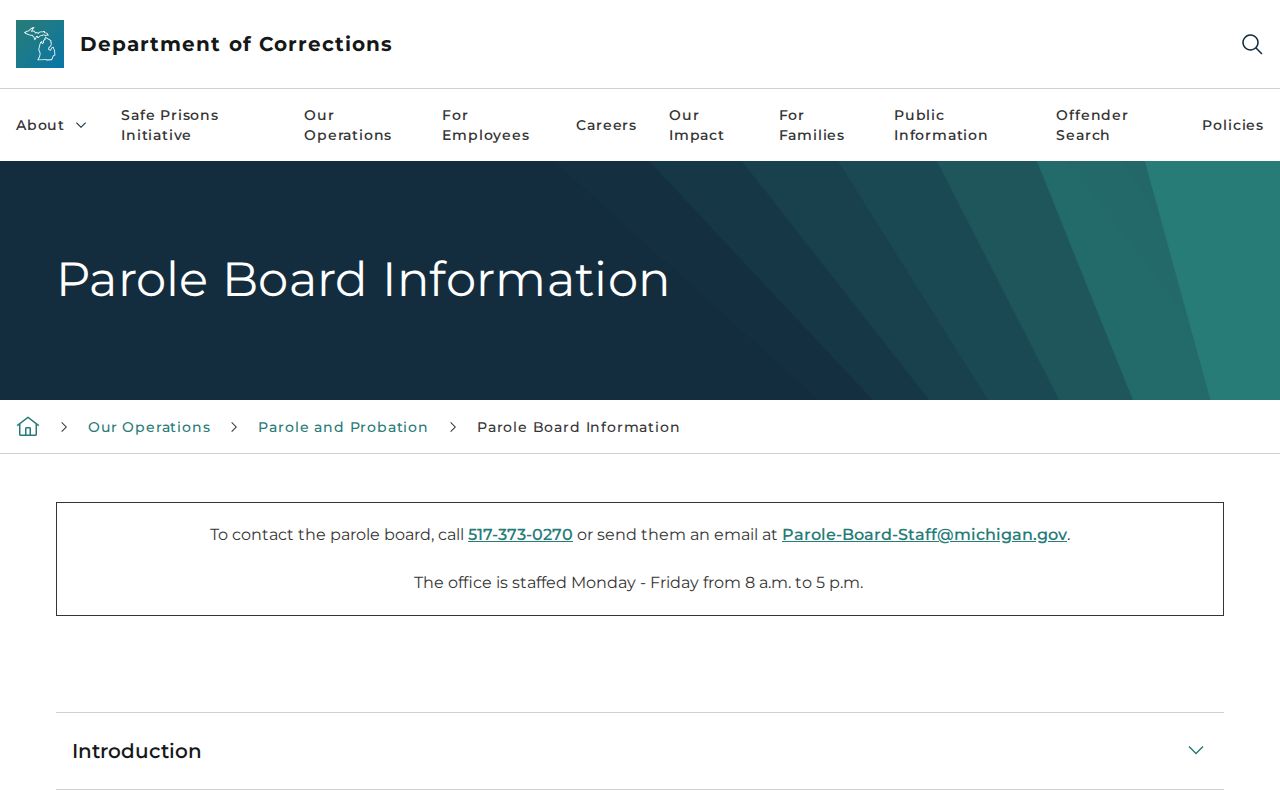
The state guidance shows why the judicial minimum is a jurisdiction point rather than a universal percentage shortcut.
Benzie County Legacy Prison Credits
Older offense cohorts may retain good-time, special-good-time, disciplinary-credit, or disciplinary-time treatment. MCL 800.33 is one source for legacy state-prison credits and disciplinary time. Its existence does not mean every person now in prison earns the same reduction. Offense date, offense type, sentence structure, prior custody credit, and disciplinary classification all matter.
Do not calculate a modern Benzie County state-prison release date by applying an old credit table to the current sentence. First identify the judgment and offense date. Then use OTIS for official public fields and MDOC for the underlying calculation. Consecutive sentences, corrected credit, amended judgments, and statutory exclusions can all defeat a simple arithmetic estimate.
The official legacy credit statute shows the detailed categories behind older calculations.
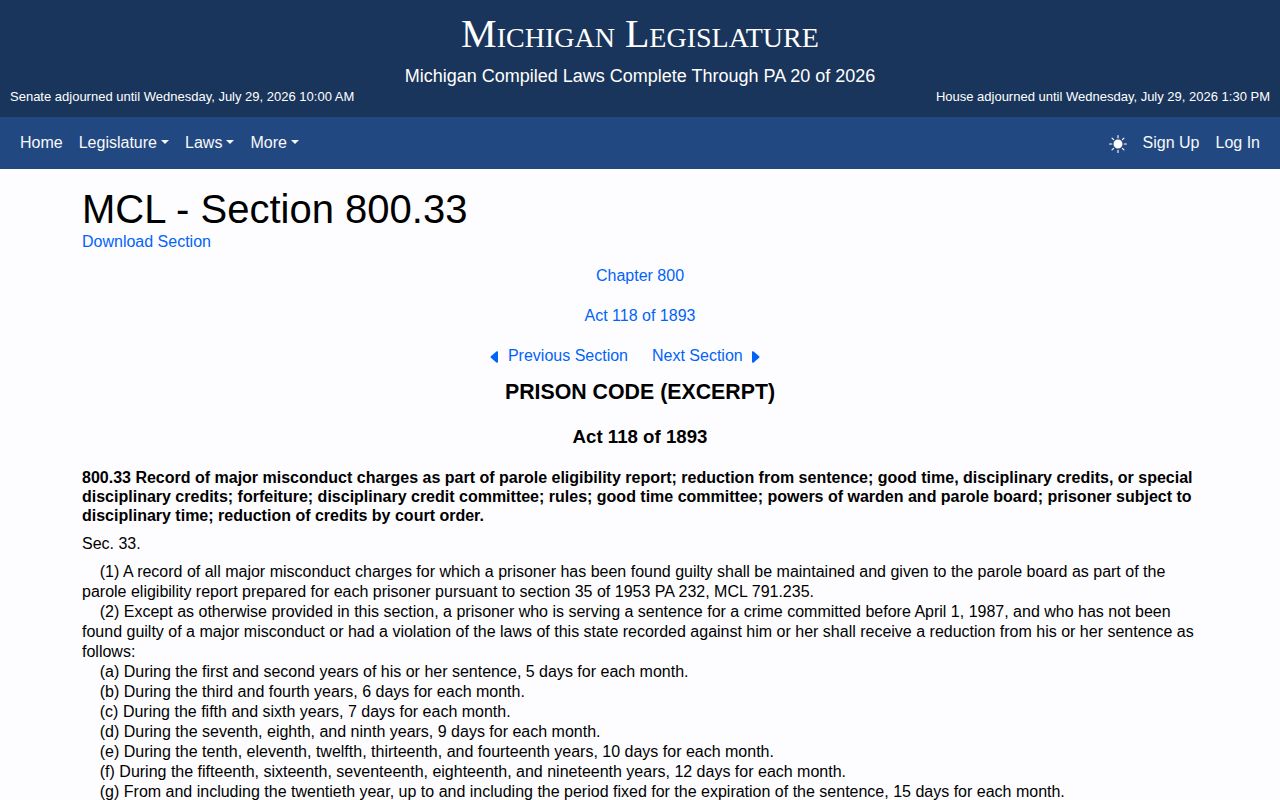
The statute image supports a case-specific review, not a single credit rule for all Michigan prisoners.
Note: Current incarceration does not establish which credit system applies; the offense date and sentence law control that question.
Benzie County Jail Sentence Credits
Michigan's state and county calculations are easy to confuse. A rule-compliant county prisoner may receive one day of sentence reduction for each six days under MCL 51.282. The Sheriff may prescribe forfeiture for rule infractions and may restore some credit lost for minor violations. MCL 51.283 requires the governing rules to be posted and places responsibility on an eligible prisoner to call the credit entitlement to the Sheriff or deputy's attention.
This county-jail rule is not a state-prison parole formula. It does not alter an OTIS Earliest Release Date and does not create an official Benzie County online projection. The county publishes no public date calculator. Court-awarded prior custody credit, concurrent or consecutive cases, another hold, a sentence amendment, and credit forfeiture or restoration can change the actual day. The correct source is the jail's calculation or release form.
A person held before trial is in a different position. Until the court imposes a sentence, good-time arithmetic cannot supply a fixed exit date. Bond may authorize release, but jail staff must still process the order and check other holds. If the Sheriff transfers the person to another custodian, the Benzie exit date is not a community release date.
Benzie County Release Date Changes
Release-date fields can move when the facts or legal inputs change. State calculations may be revised after an amended judgment, appellate order, credit audit, correction to consecutive terms, or other recalculation. County dates can change after the court awards custody credit, another agency places or removes a hold, disciplinary credit is lost or restored, or a new order reaches the jail.
| Change | Possible effect | Best source |
|---|---|---|
| Amended judgment or appellate order | Changes a term, credit, or sentence structure | Sentencing court and MDOC or jail calculation |
| Consecutive sentence correction | Moves eligibility or discharge dates | Court judgment and MDOC sentence record |
| Credit audit | Adds or corrects prior custody credit | Custodian's calculation and court order |
| Disciplinary action | May affect legacy state credits or county credit | Applicable agency record and governing rule |
| Detainer or other hold | May prevent community release or cause transfer | Release disposition and receiving agency |
| Parole grant, denial, or suspension | Changes whether prison release occurs after eligibility | OTIS status, Date Paroled, and Board record |
A court docket, OTIS profile, and jail record answer different parts of the question. A closed court case does not establish the jail processing time. A future Earliest Release Date does not prove parole. A Benzie release entry that says "to another agency" ends county custody but begins the search with the receiving custodian.
Confirm a Benzie County Release
The actual event should be confirmed after the projected date passes. For an MDOC prisoner, check current OTIS status and Date Paroled. For Benzie County Jail, call the Sheriff and obtain the release form or equivalent entry when a stable record is needed. Ask for the release timestamp, disposition, and transfer destination if it can be disclosed. A court order explains the authority, but the custodian records the physical exit.
MI-VINE can add notice when the feeding agency supports the person and event. Michigan sources describe MDOC and participating county jails, but current official material does not specifically confirm Benzie County Jail participation. A notification can say release, transfer, escape, bond, or a court change. Read the exact event and confirm it with the source agency. The Benzie County VINE inmate check explains the one-person search and alert process.
For a durable state record, request a disclosable discharge certificate or basic parole record through MDOC FOIA. For a county record, use the Sheriff FOIA route. Michigan FOIA requires a clear description of the public record, and allowable processing fees may apply. Neither agency promises that a public web result will remain online forever.
Note: A planned date helps with timing, but current status and the custodian's completed release record close the inquiry.